Water Heater Maintenance — Complete Guide
Water heater maintenance is the difference between a tank that lasts 12 years and one that fails at year 7. For Reno homeowners, the stakes are higher because our hard water accelerates sediment buildup and anode rod corrosion. This guide walks you through the tasks that actually matter, how often to do them, and what each one costs. A water heater maintenance schedule built around Reno's water conditions looks different from a generic national checklist, and that's exactly what you'll find here. By the end, you will know exactly how to keep your water heater running without paying for services you don't need.
What You'll Find in This Guide
Prefer to have a pro handle it? Water heater maintenance is one call away.
Why Water Heater Maintenance Matters More in Reno
Most homeowners never touch their water heater until it stops working. According to ConsumerAffairs, fewer than 20% of homeowners take precautionary steps like water heater maintenance to protect against water damage. That gap matters, because a neglected tank rarely fails quietly. IBHS data shows 69% of all water heater failures result from a slow leak or sudden burst, per Alpine Intel. When that happens, you're not just replacing a water heater — you're often dealing with soaked flooring, damaged drywall, and an insurance claim.
The financial picture makes the case even clearer. IBHS estimates water heater failure insurance claims cost an average of $4,444 per claim, according to Alpine Intel. Compare that to the cost of an annual flush and inspection, and prevention wins by a wide margin. In practice, maintenance is one of the cheapest forms of home insurance you can buy.
Why Reno's Hard Water Requires a Different Schedule
Reno sits on some of the harder water in the western United States. Hard water carries dissolved calcium and magnesium, and those minerals fall out of solution as water heats. As a result, sediment settles at the bottom of your tank faster here than in soft-water regions. That layer of scale forces your burner or heating element to work harder. It also traps heat against the tank bottom, which stresses the steel and shortens the tank's life.
Beyond that, hard water eats through anode rods faster. The anode rod is the sacrificial metal bar inside your tank that corrodes so the tank itself doesn't. In soft-water areas, a rod might last five years. Here, you should check it at year three, sometimes sooner.
This is why national maintenance advice often falls short for Reno homeowners, and why a locally tuned water heater maintenance schedule matters so much. A generic "flush every few years" recommendation assumes average water, but your water is not average. With this in mind, our water heater maintenance service is built around annual flushes and sediment removal, because that is what local conditions demand. The nearly universal storage tank design makes this even more relevant. Roughly 97% of U.S. residential water heaters are the traditional storage tank style, per the Department of Energy, and tank-style heaters are exactly the type that sediment hits hardest.
Building Your Reno Water Heater Maintenance Schedule
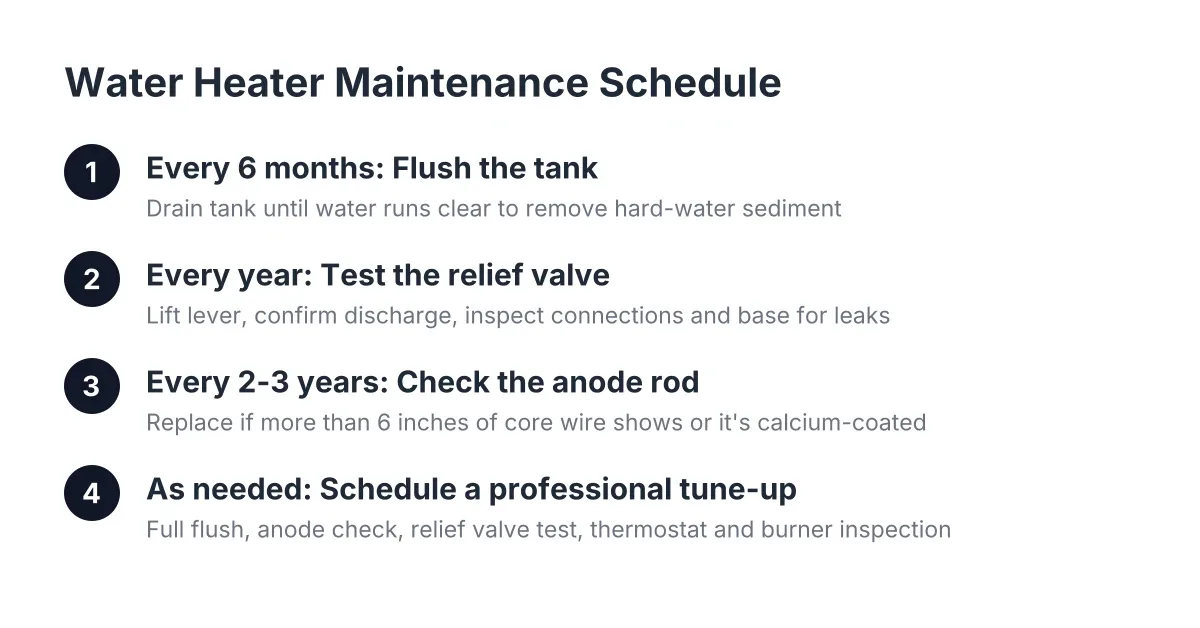
Detail-oriented homeowners want specifics, not vague advice. So here is a concrete water heater maintenance schedule you can put on your phone. Every task below takes minutes to hours, not days, and none requires special tools beyond a garden hose and a socket wrench.
Every Month: The Two-Minute Walk-By
Once a month, take a quick look at your water heater. Check the floor around the base for moisture, rust stains, or white mineral crust. Look at the fittings on top for any green or white corrosion. Additionally, listen while the unit heats, since popping, rumbling, or crackling sounds are classic signs of sediment buildup. Those noises come from water boiling underneath a layer of scale at the tank bottom. If you hear them, your tank is overdue for a flush.
Every Six Months: Test the Pressure Relief Valve
The temperature and pressure relief valve is your tank's most important safety device. Twice a year, lift the test lever briefly and let it snap back. You should hear a rush of water into the discharge pipe. However, if nothing comes out, or if the valve keeps dripping afterward, call a plumber. A stuck valve is a genuine safety hazard, not a cosmetic issue.
Every Year: Flush the Tank
How often should you flush a water heater? In Reno, the answer is once a year, no exceptions. Homeowners in soft-water regions can sometimes stretch to two years, but here, twelve months of mineral accumulation is plenty. An annual flush drains the sediment before it hardens into a thick, insulating layer. Skip a few years, though, and that scale can calcify to the point where flushing no longer removes it.
Every Three Years: Inspect the Anode Rod
Pull the anode rod at year three and look at it. If more than six inches of the steel core wire shows, or the rod is coated in calcium, replace it. Anode rod replacement typically costs far less than a new tank, and it is the single biggest factor in extending water heater lifespan. That said, rods in Reno homes sometimes need replacement sooner. If yours looks heavily consumed at the three-year check, move to a two-year inspection cycle going forward.
Water Heater Tune-Up Costs and Whether a Maintenance Plan Is Worth It
Preventive homeowners share one worry: getting upsold. You want to do the responsible thing without paying for padding. So let's talk plainly about what maintenance costs and when a plan makes sense.
What a Professional Tune-Up Includes
A proper tune-up covers a full tank flush, an anode rod check, a pressure relief valve test, and an inspection of the burner or heating elements, thermostat, venting, and connections. In other words, it bundles every step of your water heater maintenance schedule into one annual visit. Tune-up costs vary by market, but a standalone visit generally runs in the low hundreds of dollars. Compare that against the $4,444 average failure claim cited earlier, and one prevented burst pays for years of tune-ups. Our Reno water heater maintenance service spells out exactly what's included, with straight pricing and no surprise add-ons.
Is a Water Heater Maintenance Plan Worth It?
It depends on how hands-on you are. If you comfortably flush your own tank and check your own anode rod, a plan adds less value because you are already doing the work. However, if your tank sits in a tight closet, or you'd rather not wrestle a corroded drain valve, a plan turns your maintenance schedule into a calendar reminder someone else handles. For example, homeowners with older tanks often benefit most, because a trained eye catches early leak signs that a monthly walk-by can miss. A fair plan should cost roughly what an annual tune-up costs, spread over the year, plus priority scheduling. Anything much beyond that deserves scrutiny.
When Maintenance Stops Making Sense
Honesty matters here. If your tank is past 10 to 12 years old and showing rust at the fittings or moisture at the base, maintenance dollars are better spent on replacement. At that point, it is also worth weighing your options. For homes using 41 gallons or less of hot water daily, the DOE reports tankless water heaters can be 24% to 34% more energy efficient than conventional storage tank models, per Bradford White Water Heaters. The Department of Energy's water heater maintenance guidance is a solid neutral reference if you want to compare types before deciding. To put it simply: maintain a healthy tank, but don't pour money into one that's already failing.
Ready to Get Started?
If you'd rather have a local pro handle the flush, the anode check, and the full inspection in one visit, we do exactly that for Reno homeowners, with clear pricing and no upsell pressure. One annual appointment keeps your water heater off the emergency list and your floors dry. Call us to schedule your tune-up before Reno's hard water schedules a failure for you.