Hiring a Plumber — Complete Guide
hiring plumber — The Complete Guide
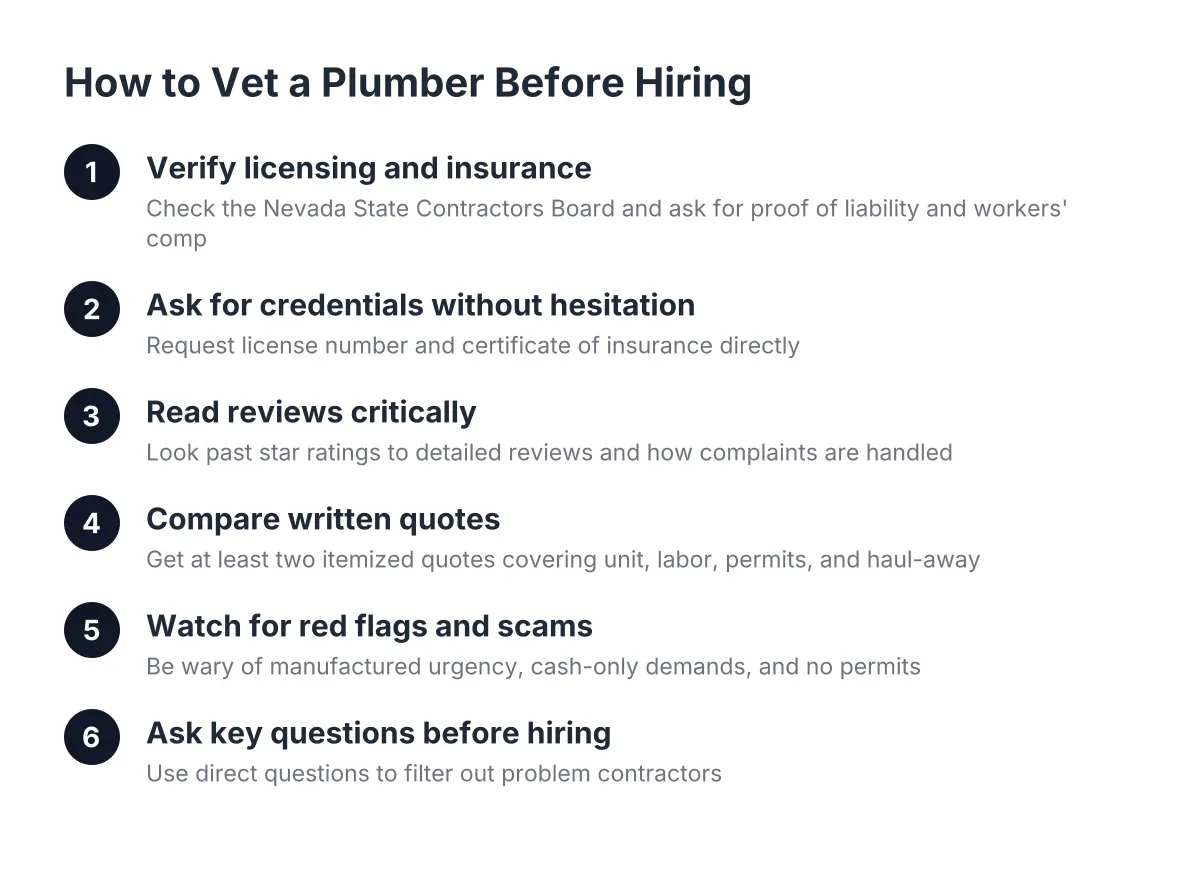
Hiring plumber help should not feel like a gamble, yet many Reno homeowners have learned the hard way that it can be. This guide covers everything you need to vet a plumbing or water heater contractor before they set foot in your home. Vetting a plumber the right way means verifying licensing and insurance, reading reviews with a critical eye, comparing quotes, and spotting the red flags that signal a bait-and-switch operator. By the end, you will have a clear checklist you can apply to any provider, including us. That transparency is the point, because a trustworthy contractor has nothing to hide.
What You'll Find in This Guide
Coming soon — we're building out this topic cluster.
Vetting a Plumber's Credentials: Licensing, Insurance, and Proof
Start every search with one question: is this plumber licensed and insured? It sounds basic, but plenty of homeowners skip it because the ad looked professional or a neighbor passed along a phone number. In Nevada, plumbing contractors must hold an active license, and you can verify any license number for free through the Nevada State Contractors Board. The lookup takes about two minutes. That said, a surprising number of low-quality operators count on you never checking.
Why does the license matter so much? Because it ties the contractor to a regulatory body with real consequences. A licensed plumber passes trade exams, carries a bond, and risks losing their livelihood if they cut corners. An unlicensed handyman risks nothing except your money. Additionally, most manufacturer warranties on water heaters require professional installation. If an unlicensed installer botches the job, you may lose warranty coverage on a unit you just paid for.
Insurance deserves the same scrutiny. Ask for proof of both general liability coverage and workers' compensation. If a worker gets hurt in your home and the company carries no workers' comp, you could face liability as the property owner. Similarly, if an installation goes wrong and floods your utility room, general liability insurance is what pays for the damage. The stakes are not small. IBHS estimates water heater failure insurance claims cost an average of $4,444 per claim, according to Alpine Intel. A bad install can trigger exactly that kind of failure.
How to Ask Without Feeling Awkward
Many homeowners hesitate to ask for documentation because it feels confrontational. It is not. Reputable contractors answer these questions every week, and most will volunteer the information before you ask. In practice, the request is simple: "Can you send me your license number and a certificate of insurance?" A professional replies with documents, while a problem operator replies with excuses, vague reassurances, or pressure to move fast. That difference tells you almost everything you need to know. With this in mind, treat any reluctance to share credentials as a hard stop, not a yellow flag.
Reading Reviews and Comparing Quotes When Vetting a Plumber
Reviews are useful, but only if you know how to read them. Searching for the best rated plumber reviews in Reno surfaces dozens of companies with 4.8 stars or better. As a result, the star rating alone tells you very little. Instead, dig into the content of the reviews themselves. Do customers mention the same technician names? Do they describe the price they were quoted matching the price they paid? Detailed reviews about real jobs carry far more weight than a wall of one-line five-star ratings posted in the same week.
Pay special attention to how the company responds to negative reviews. Every business gets a bad review eventually, but the response reveals character. A defensive, blame-the-customer reply is a warning. A calm response that explains the situation and offers a fix suggests a company that stands behind its work.
What a Trustworthy Quote Looks Like
Once you have a shortlist, request written quotes from at least two providers. A second opinion plumbing quote is one of the cheapest forms of insurance you can buy. For a water heater replacement, a legitimate quote should itemize the unit brand and model, labor, permit fees, haul-away of the old tank, and any code upgrades like expansion tanks or new venting. Vague quotes hide costs, while detailed quotes prevent surprises.
Beyond that, be cautious with quotes that land dramatically below the others. A lowball number often means the contractor plans to "discover" problems mid-job and revise the price upward. That is the classic mechanism behind red flags in plumbing quotes, and it works because you feel trapped once the old water heater sits disconnected in your garage. To put it simply, the cheapest quote and the best value are rarely the same thing. Compare scope, not just the bottom line, then ask each contractor to explain any line item you do not understand. A straight answer builds trust. A dodge tells you to keep looking.
Red Flags, Scams, and the Questions That Protect You
Knowing how to avoid plumbing scams comes down to recognizing pressure tactics before you sign anything. The most common scheme is manufactured urgency. A technician inspects your water heater, declares it dangerous, and insists it must be replaced today at a premium price. Sometimes the unit really is failing. However, real professionals explain the problem, show you the evidence, and give you time to decide. Scammers push; legitimate plumbers inform.
Other warning signs are just as telling. Watch for cash-only demands, requests for large deposits before any work begins, no physical business address, and quotes delivered only by phone with nothing in writing. Additionally, be wary of anyone who refuses to pull required permits. Skipping permits saves the contractor time, but it leaves you holding unpermitted work that can complicate insurance claims and home sales later.
Questions to Ask Before Hiring a Plumber
A short list of direct questions filters out most bad actors. Ask how long the company has operated in the Reno area. Ask who will actually perform the work, an employee or a subcontractor.Additionally, ask what warranty covers the labor, separate from the manufacturer warranty on the equipment.Furthermore, ask what happens if the final bill exceeds the quote. Finally, ask how they handle emergency calls, because water heater failures rarely wait for business hours.
The answers matter, but so does the manner. A confident contractor answers plainly and welcomes the scrutiny. For example, when you ask about warranty terms, you should hear specific numbers, not "we'll take care of you." IBHS data shows 69% of all water heater failures result from a slow leak or sudden burst, according to Alpine Intel. This means that the quality of the installation and the follow-up support directly affect whether you end up with a small repair or a flooded floor. Choose the contractor whose answers you could repeat back word for word.
Building a Long-Term Relationship With Your Plumber
Hiring plumber services once is a transaction. Finding a plumber you can call for the next decade is an asset. The best time to build that relationship is before an emergency, when you can evaluate a company calmly instead of choosing whoever answers the phone at 11 p.m. with no hot water in the house.
Maintenance visits offer the easiest way to test a company on a low-stakes job. A water heater flush and inspection costs relatively little, and it shows you how the company communicates, schedules, and bills. Unfortunately, most homeowners never take this step. Fewer than 20% of homeowners take precautionary steps, such as water heater maintenance, to protect against water damage, according to ConsumerAffairs. That gap creates risk, because small problems like sediment buildup and slow tank corrosion grow quietly until they fail loudly.
Why the Right Plumber Saves You Money Over Time
A contractor who knows your home works faster and quotes more accurately. They know your water heater's age, your water quality, and your shutoff locations. Consequently, when something does go wrong, the diagnosis takes minutes instead of an hour of exploration billed at your expense. They can also tell you honestly when repair makes sense and when replacement is the smarter spend, because they are not trying to win a one-time sale.
There is a defensive benefit too. Plumbing failures escalate fast. A split pipe can dump 250 gallons of water into a home in a single day, according to Benson, Young & Downs Insurance Agency. A plumber who already knows your system can respond to that kind of emergency with speed and context. In contrast, a stranger starts from zero while the water keeps running. With this in mind, treat vetting a plumber as a one-time investment. Do it thoroughly now, and you will never have to do it under pressure again.
Ready to Get Started?
You now have the same checklist we would use to vet any contractor, and we invite you to run us through every item on it. Ask for our license number, our insurance certificates, and a written itemized quote, because we built this business on having nothing to hide. When your water heater acts up, or you simply want a second opinion on someone else's quote, give us a call and put the checklist to work.