Emergency Plumbing — Complete Guide
plumbers near me — The Complete Guide
When water pours out of a pipe at 2am, searching "plumbers near me" is a survival instinct, not a research project. This guide covers the household plumbing emergencies that trigger a same-night call: burst pipes, major leaks, sump pump failures, and water heaters that quit without warning. You will learn how to judge severity fast, what to do before a technician arrives, and what honest after-hours pricing actually looks like in Reno. Because the biggest fear in an emergency is getting gouged, we lay out real cost expectations so you can make a clear decision under pressure. Whether you are typing "plumbers near me" into your phone right now or planning ahead for the next cold snap, this guide walks you through the decisions that matter most.
What You'll Find in This Guide
- Water Heater Repair vs. Replacement: An Honest Cost Breakdown for Reno Homeowners
- Emergency Plumbing Services in Reno, NV
- How to Diagnose No Hot Water: Common Causes and Quick Fixes for Reno Homes
- Emergency Plumber Near Me in Reno: Fast Help and Honest After-Hours Pricing
Prefer to have a pro handle it? Emergency plumbing services is one call away.
Signs You Need Emergency Plumbers Near Me Tonight, Not Tomorrow
Not every plumbing problem justifies a midnight call. However, some absolutely do, and knowing the difference saves you money in both directions. Call tonight if water is actively flowing where it should not be, if you cannot stop it at a shutoff valve, or if the water is reaching electrical outlets, appliances, or finished living space. Additionally, sewage backing up into your home is always an emergency because of the health risk, not just the mess.
Water heaters deserve special attention here. According to Alpine Intel, IBHS data shows 69% of all water heater failures result from a slow leak or sudden burst. That means the tank in your garage rarely fails politely. It either drips quietly for weeks or lets go all at once. If you find standing water around the base of your tank, treat it as urgent. A slow leak tonight can become a full rupture by morning, and a 40 or 50 gallon tank empties fast onto your floor.
By contrast, some problems can wait until business hours, and waiting saves you the after-hours premium. A single slow drain, a dripping faucet, or a running toilet is annoying but stable. Even no hot water is sometimes a wait-until-morning problem, depending on the cause. For example, a tripped breaker or a blown-out pilot light might be something you can handle yourself in ten minutes. Our guide on how to diagnose no hot water walks you through that decision in order, starting with the checks that tell you whether anything is dangerous.
This is exactly the moment when knowing how to search for plumbers near me pays off — not in a panic, but with a plan already in hand.
The One-Question Severity Test
If you are unsure, ask yourself this: is the damage getting worse while I wait? Water spreading across a floor, soaking drywall, or dripping through a ceiling gets more expensive every hour. In that case, shut off the water at the main valve and call. On the other hand, if the problem is contained and stable, you can safely book a daytime appointment and skip the emergency rate. To put it simply, pay for urgency only when urgency is real. That single question can save you from an unnecessary after-hours fee or, just as often, push you to act before a small leak becomes a major loss.
What Emergency Plumbers Near Me Actually Cost After Hours
Fear of price-gouging keeps a lot of Reno homeowners staring at a spreading puddle instead of picking up the phone. That fear is understandable. After-hours pricing is where bad operators hide their worst behavior, because a panicked caller at 2am rarely shops around. However, honest emergency pricing is not a mystery, and you deserve to understand it before anyone shows up at your door.
Legitimate after-hours pricing usually works one of two ways. Some companies charge a flat emergency dispatch fee on top of standard repair rates. Others use an elevated hourly rate for nights, weekends, and holidays. Either model can be fair. What matters is that the company tells you the structure before the truck rolls, quotes the repair before work begins, and puts it in writing. As a result, you should hear real numbers on the phone, not vague promises that "we'll figure it out on site." So when you search for plumbers near me during an emergency, ask about pricing structure in the very first call, before anyone drives to your house. We break down typical ranges, red flags, and the questions to ask in our guide to finding an emergency plumber near me in Reno with honest after-hours pricing.
Why Waiting Can Cost More Than the Emergency Fee
Here is the math that matters. According to Alpine Intel, IBHS estimates water heater failure insurance claims cost an average of $4,444 per claim. Compare that to a few hundred dollars of after-hours premium, and the emergency call often looks like the cheap option. Water damage compounds. Soaked drywall, warped flooring, and mold remediation all cost far more than a fast repair. Consequently, the smart move is not avoiding the emergency fee. It is calling someone who charges it honestly.
Repair versus replacement is the other financial fork in the road, especially with a failing water heater. If your tank is old, a midnight repair might just delay an inevitable replacement by a few months. Before a technician arrives, it helps to know where that line falls. Our honest water heater cost breakdown for Reno homeowners lays out the numbers so you can make that call with a clear head instead of under pressure.
Burst Pipes, Flooding, and Sump Pump Failure: What to Do Before Help Arrives
The minutes between calling and the technician's arrival matter more than most homeowners realize. A split pipe can dump 250 gallons of water into a home in a single day, according to Benson, Young & Downs Insurance Agency. That works out to more than 10 gallons an hour. Therefore, what you do in the first fifteen minutes can save you thousands in damage, and it can shape how much repair work waits for the plumber when they arrive.
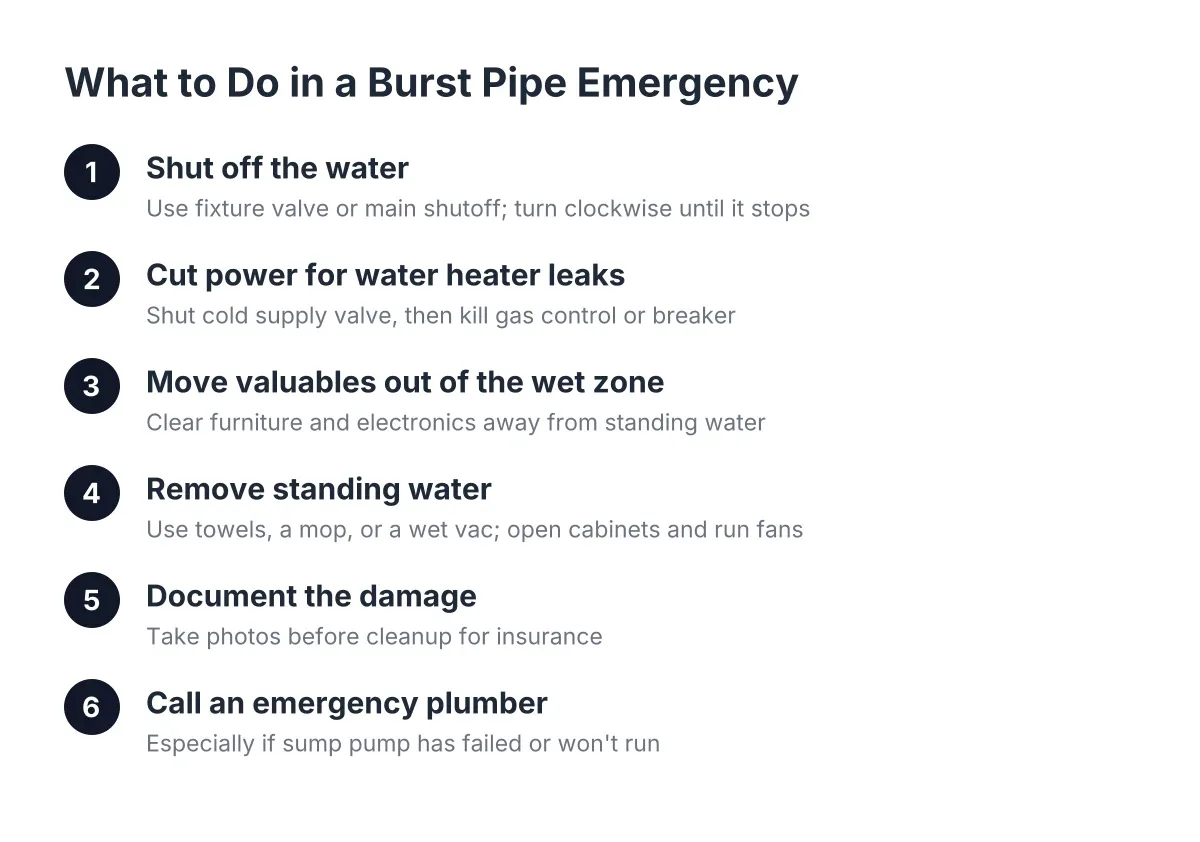
Start with the water. Find your main shutoff valve and close it. In most Reno homes, it sits near where the water line enters the house, often in the garage, a crawl space, or near the water meter box at the street. Next, if the leak is near anything electrical, cut power to that area at the breaker panel before you step into standing water. Then open the lowest faucet in the house to drain pressure from the lines. Finally, move what you can. Rugs, boxes, and furniture soak up water fast, and getting them off the floor limits the damage list.
Frozen Pipes Are a Reno Problem Too
Reno winters get cold enough to burst pipes, especially in garages, crawl spaces, and exterior walls. Nationally, about 225,000 homes experience property damage each year from frozen pipes, per Benson, Young & Downs Insurance Agency. The American Red Cross guidance on frozen pipes covers safe thawing methods, but if a frozen pipe has already split, thawing it will start the flood. In that case, keep the water off and call.
Sump Pumps and Basement Flooding
Sump pump failure has brutal timing. It tends to show up during a spring thaw or a heavy storm, exactly when you need the pump most. If your pump hums but moves no water, or stays silent while the pit fills, do not wait for the water line to climb. Meanwhile, the prevention numbers tell an honest story: fewer than 20% of homeowners take precautionary steps, such as water heater maintenance, to protect against water damage, according to ConsumerAffairs. Most emergencies announce themselves weeks in advance through small drips, odd noises, and slow drains.
When one does arrive anyway, our emergency plumbing services in Reno page covers exactly what we handle after hours and how dispatch works. And if you are searching for plumbers near me at that moment, having already read this guide means you will know what questions to ask and what a fair price actually looks like.
Ready to Get Started?
If water is going where it should not be right now, do not wait for morning and do not settle for a company that hides its after-hours rates. We serve Reno homeowners with fast local dispatch, straight-talk pricing quoted before work begins, and technicians who treat a 2am burst pipe with the urgency it deserves. Call now and get a real person, a real price, and real help on the way.